Winning EPR & PRO Contracts in 2026–2027
By Lucas James · Published November 22, 2026 · Reviewed by Lucas James · Facts last verified November 22, 2026
EPR is changing who writes the checks
If you run a MRF, a hauling fleet, or a specialty processing line, the contract you are chasing in 2026 may not come from a city at all. In the states rolling out packaging and product stewardship programs, recycling service agreements are increasingly funded by producers and administered through Producer Responsibility Organizations (PROs), and those PROs buy differently than a municipal procurement office does.
They buy verifiable data. Documented tons per hour, separated cost centres, permitted capacity, and chain of custody. If your operation can produce that, you are a credible bidder. If your numbers live in one blended tipping fee, you are not.
This is where a lot of capable plants lose work they were qualified to win — particularly materials recovery facilities and scrap processors that have never had to publish their operational evidence.
Seven states now have packaging EPR, and the fees are live
As of 2026, seven states have enacted packaging EPR legislation: California (SB 54), Oregon (SB 582), Colorado (HB 22-1355), Maine (LD 1541, amended by LD 1423), Minnesota (HF 3911), Maryland (SB 901), and Washington (E2SSB 5284) (EPR Atlas; Holland & Knight, January 2026). Oregon began charging annual fees in July 2025 and Colorado in January 2026 (EPR Atlas tracker).
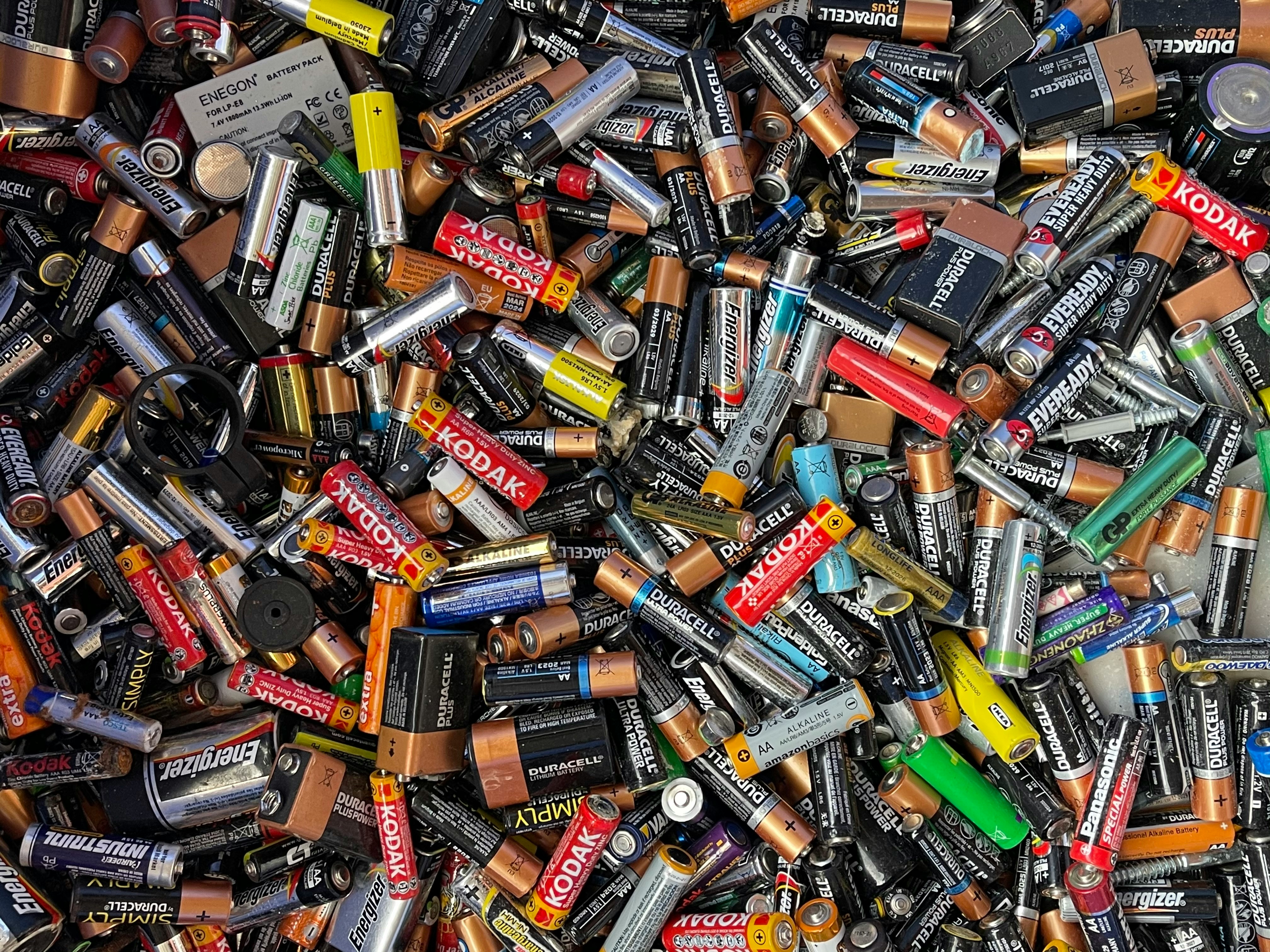
Packaging is only one lane. The Product Stewardship Institute counts 150 EPR laws across 34 states and the District of Columbia, spanning 22 product categories including batteries, paint, mattresses, solar panels, and electronics (PSI EPR Laws Map). PaintCare runs programs in 12 states plus DC (PaintCare), and the national battery stewardship program formerly called Call2Recycle now operates as The Battery Network (batterynetwork.org).
Three contract structures, and what each one asks of you
Across the programs we track, service agreements tend to fall into three shapes. The mechanics differ by state, so confirm the model in yours before you decide what to prepare.
Municipal reimbursement. The city keeps its existing hauler and MRF contracts, and the PRO reimburses eligible net costs. Your job is to make those claims substantiable: collection, sorting, residue disposal and overhead have to be separable in your books, not averaged into one rate.
Municipality-to-PRO service agreement. Local government keeps operating the service, under performance standards set with the PRO. That means defined KPIs, contamination limits, an agreed covered-materials list, and reporting in the PRO's format. Operators who arrive with their own reporting already in that shape move faster through review.
Direct PRO contracting. The PRO takes on operational coordination and contracts directly with haulers, MRFs, and downstream processors. Here you register as a vendor, prove capacity, and prove where material actually goes.
Model three is the one that most rewards documentation, and the one that most punishes operators who have never had to show their work.

Why blended cost accounting fails a PRO audit
PROs are funded by consumer brands and manufacturers, and they answer to their own auditors and to state regulators. A reimbursement rate has to be defensible line by line. So does an infrastructure grant.
The legacy approach is risky in this environment: one blended tipping fee that folds collection, sorting, residue disposal, labour and overhead together, plus informal estimates of inbound contamination and throughput. When a PRO cannot verify the number, it cannot legally approve the reimbursement, and it will not award the capital grant.
The audit-ready approach looks like this: separate line items for collection, sorting labour, residue disposal and capital expenditure, and capacity figures taken from instrumented data rather than recollection. Verified mass balance and documented tons per hour, bale purity specs, optical and manual sort data. On the downstream side, auditable bills of lading and downstream processor certifications rather than informal broker arrangements, which is what prevents sham recycling from entering a program's material chain.
None of this requires a large plant. It requires a plant that can prove what it already does. If your records are held together by spreadsheets and informal estimates, procurement audit preparation is the work to do first, because every downstream step depends on those numbers being clean.
The four-point pre-bid audit
Before you bid or apply for producer funding, put these four items in front of your commercial and operations leads together.
1. Contract assignability and expiration. When do existing municipal agreements expire? Who owns carts, containers and rolling stock? Do the contracts allow assignment or amendment if a PRO assumes management? Commercial and operations need the same answer to these questions, because the PRO will ask once and expect consistency.
2. Granular cost accounting. Can your accounting system isolate covered EPR materials from non-covered commercial waste, and separately verify sorting, contamination and residue disposal expense? If not, that is a system problem, not a spreadsheet problem.
3. Verified capacity and equipment specs. Permitted daily tonnage, tons per hour, line capacity, and current sorting technology — the same figures state needs assessments ask for. Oregon's Plastic Pollution and Recycling Modernization Act (SB 582, 2021) runs on a state-managed needs assessment, and the questions in those documents are effectively your bid form in advance (Oregon DEQ; RecycleOn Oregon annual report).
4. Downstream chain of custody. Can you produce auditable mass balance reports showing recovered commodities reached legitimate, compliant end markets? This is the item PROs return to most often, and the hardest one to assemble retroactively. If contamination is your weak point, the methods used to measure it are worth studying before you promise a purity grade — our podcast episode with Recycle Track Systems covers how identification works in practice.
Register before the specs are locked
Circular Action Alliance, which administers packaging programs in several states, runs a service provider registration route for local governments and businesses that want to work with or receive funding from CAA (CAA service provider registration). Registration is how you get onto the lists that receive needs assessment surveys, stakeholder notices, and service provider RFP alerts.
Beyond packaging, register as an approved downstream processor with the established stewardship programs in your material stream: The Battery Network for batteries, PaintCare for architectural paint, and the certified electronics and ITAD networks for e-waste. Each has its own vendor qualification path, and each is a buyer that will never appear in a city bid notice.
If you want one place to watch active bids, the Green Decades RFP Radar tracks federal and municipal postings across materials recovery, hazardous waste treatment and disposal, and other waste management services. The live bid list lets you filter by service type and state, with dedicated views for materials recovery facilities and, for example, Oregon postings. It is a starting point, not a substitute for the state portals and PRO notices — and winning enterprise RFPs is the discipline that turns a listing into a submitted bid.
Your spec sheet is a procurement document
That is a marketing failure with a procurement consequence. The fix is not a brochure. It is a facility capability statement that reads like a spec sheet: what you are permitted to accept, what you can process per hour, how you handle contamination and residue, what your end markets are, and who to contact. Fast to load, easy to search, and consistent with what you submitted to the state. That sits between website modernization and B2B web infrastructure — the portal and capability pages an evaluator can actually use — and it is written by the technical content desk rather than a generalist copywriter.
For a hazardous or liquid waste processor, the same principle applies with different evidence: permitted waste codes and manifest records carry the weight that throughput figures do in a MRF.
A three-step playbook for 2026–2027
Map your state's contracting model. Identify whether revenue reaches you through municipal reimbursement or a direct PRO service agreement, and who administers it. Start with the PSI EPR Laws Map and your state agency's rulemaking page, then confirm the mechanics with the PRO itself.
Register early and submit capacity data. Get onto the PRO service provider lists and stewardship vendor lists now, and answer state needs assessments with real figures. Being on the approved bidder list before specs are locked is worth more than a polished proposal later.
Separate your cost accounting and publish your specs. Pass the financial audit, and make your capacity easy to verify online. Those two moves cover the front and back of the same evaluation.
Program rules are moving quickly, and details differ state to state. Treat this as a starting map, verify current requirements with your state agency and the relevant PRO, and confirm anything you plan to publish or submit.
If your plant has the permits and the sorting technology to capture EPR volume but your website and bid packages do not communicate that engineering readiness to evaluators, that is the gap we work on. Start with a brand and site audit, see how we support sales outreach alongside your own team, or book a meeting.
Sources
- EPR Atlas, U.S. packaging EPR laws by state
- EPR Atlas, 2026 tracker (Oregon fees July 2025, Colorado January 2026)
- Holland & Knight, "The Latest Pandora's Box: What You Need to Know Now About State EPR Laws," January 2026
- Product Stewardship Institute, EPR Laws Map
- PaintCare, program states
- The Battery Network (formerly Call2Recycle)
- Circular Action Alliance, service provider registration
- Oregon DEQ, Recycling Equity and Multifamily Needs Assessment (SB 582, 2021)
- RecycleOn Oregon, CAA annual report (state-managed needs assessment)
- Waste360, "RCON 2026: What Waste Professionals Need to Know About EPR"
- HDR, "Understanding EPR: How Extended Producer Responsibility Shapes Waste Management in the US"
Related
More insights
MRF Management Software: 7 Tools Compared for 2026
Generic hauling apps fail processing plants. Seven systems that hold up under audits, e-Manifest rules and buyer vetting.
November 22, 2026
Is Your Sustainability Company’s WordPress Site Vulnerable to AI-Driven Hacks?
Old PHP versions and WordPress plugins leave recycling, remediation, and clean-tech sites vulnerable to AI-driven exploit agents. Here is how to test your security with free tools and why migrating to Next.js on Vercel protects your digital operations and B2B growth engine.
November 10, 2026
The Hidden Water, Energy, and Labor Cost of AI
Large AI models run on data centers that consume significant water and energy, and are trained using documented human labor exploitation. We break down what to look for, and point you to a deeper piece by researcher Dr. V on telling exploitative AI apart from human-safe AI.
October 30, 2026
Newsletter
Get new insights by email.
Free. It's one newsletter covering the whole site, so you'll see the rest of what's new too.